
Why Alli is the one system
for your data, decisions, and execution.

Alli is PMG's operating system for business transformation. It connects your data, decisions, and execution in one governed system, so every team works from the same numbers, moves faster, and can show what its work is worth.
What can Alli do for your business?
Alli helps a business make decisions faster and defend them better. It connects the data teams depend on, answers questions while decisions are still open, builds plans from evidence, turns those plans into live work, and shows what that work returned. Each outcome below is something a team can see change, not a feature on a list.
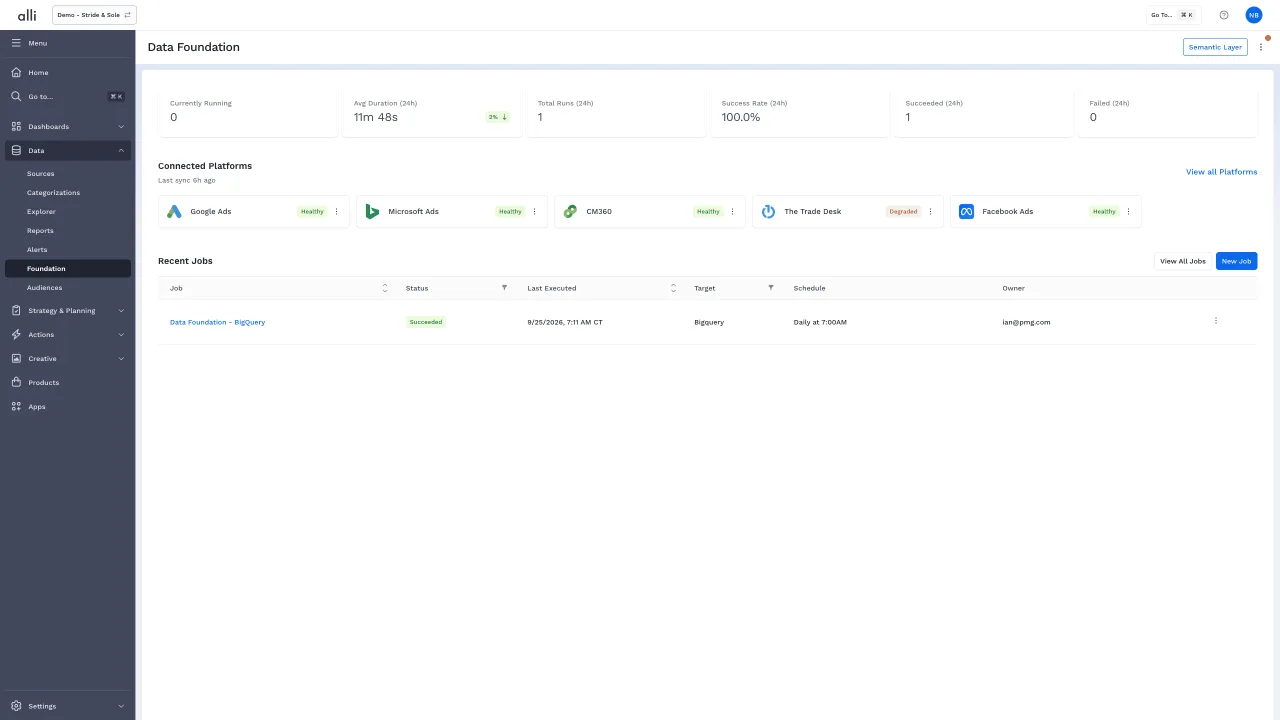
Trust the numbers
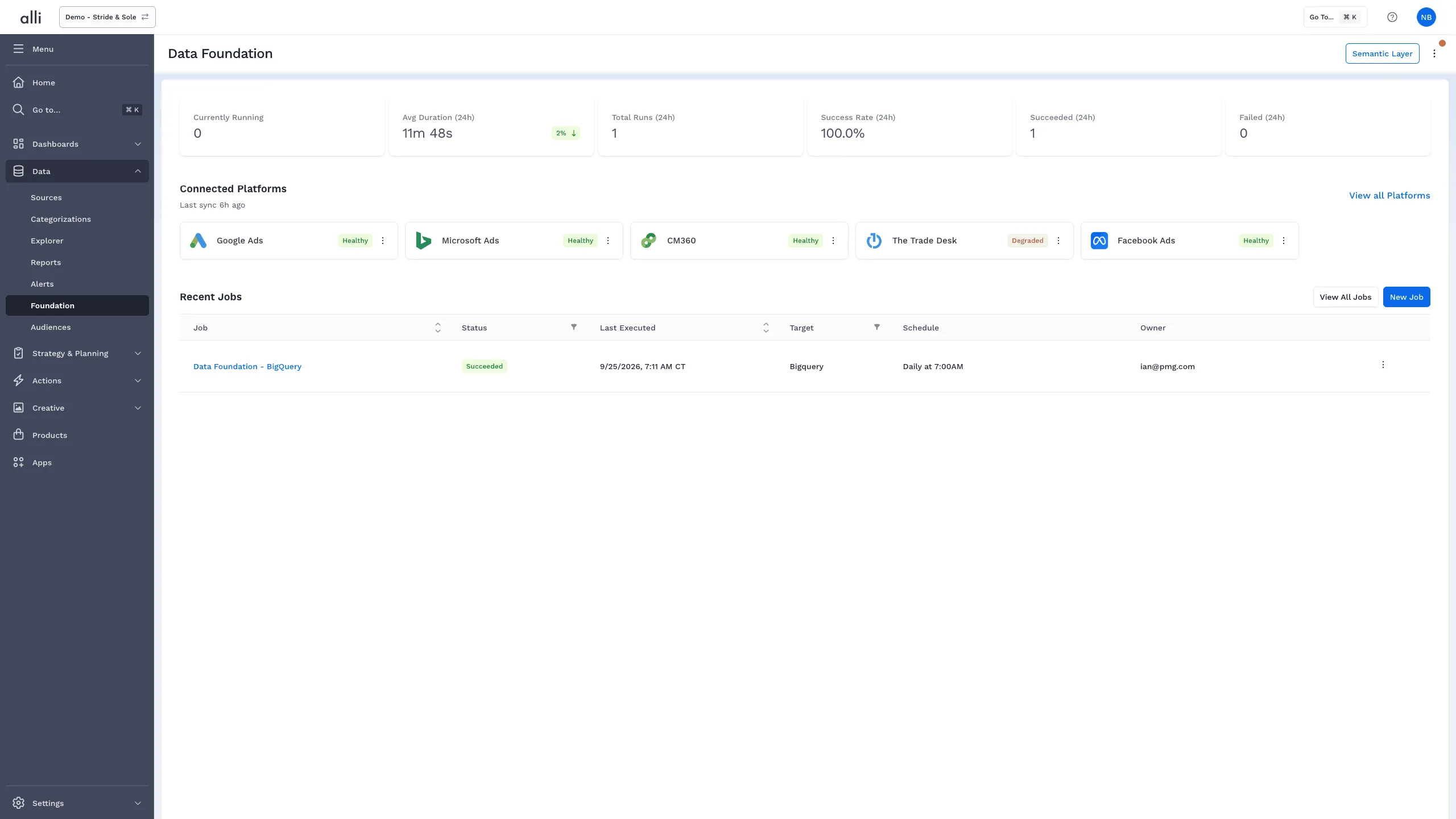
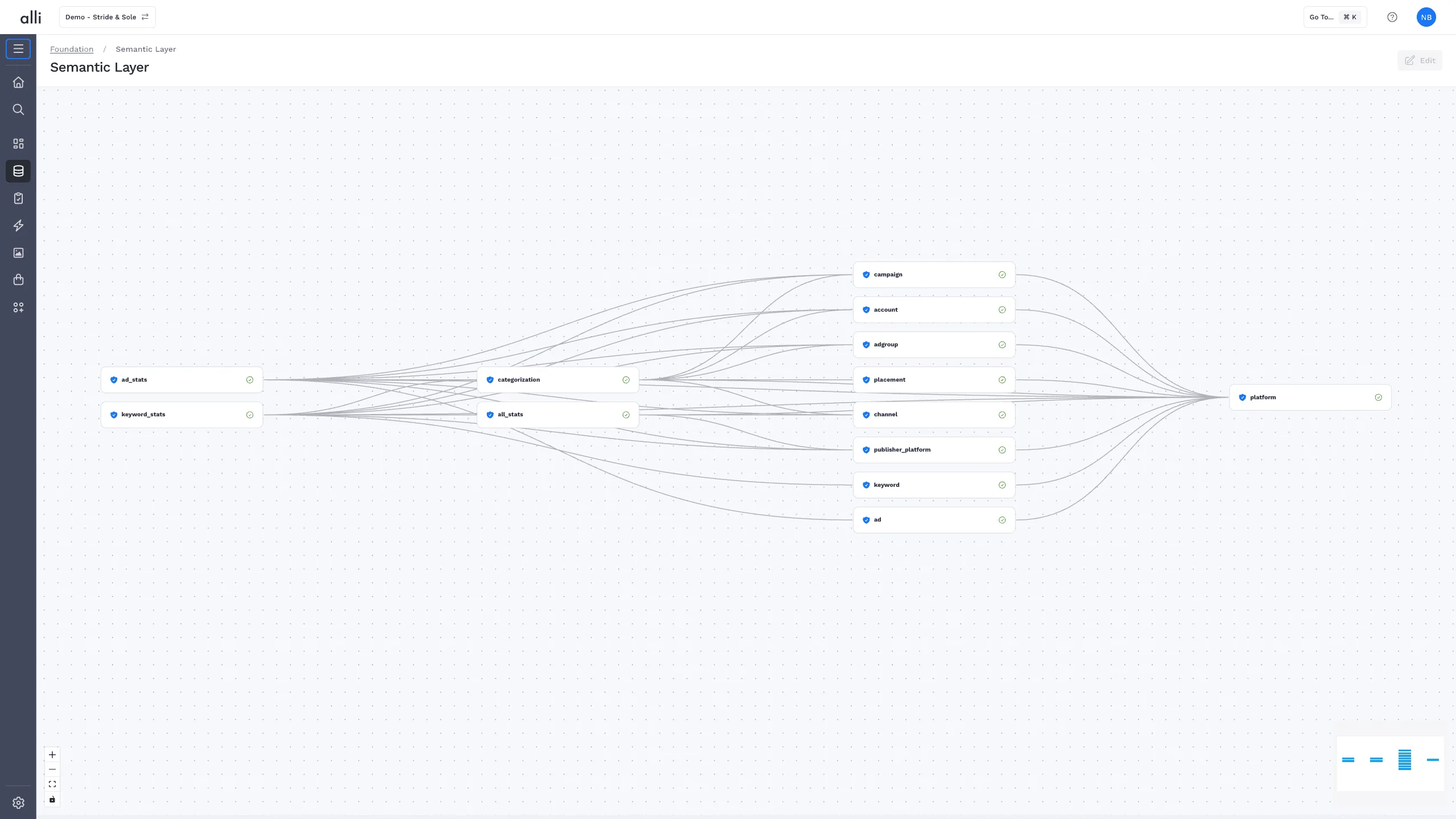
Alli connects every platform, market, and first-party source into one governed foundation, with one set of definitions.
What changesMeetings start with decisions, not debates about whose report is right.
Explore Alli Data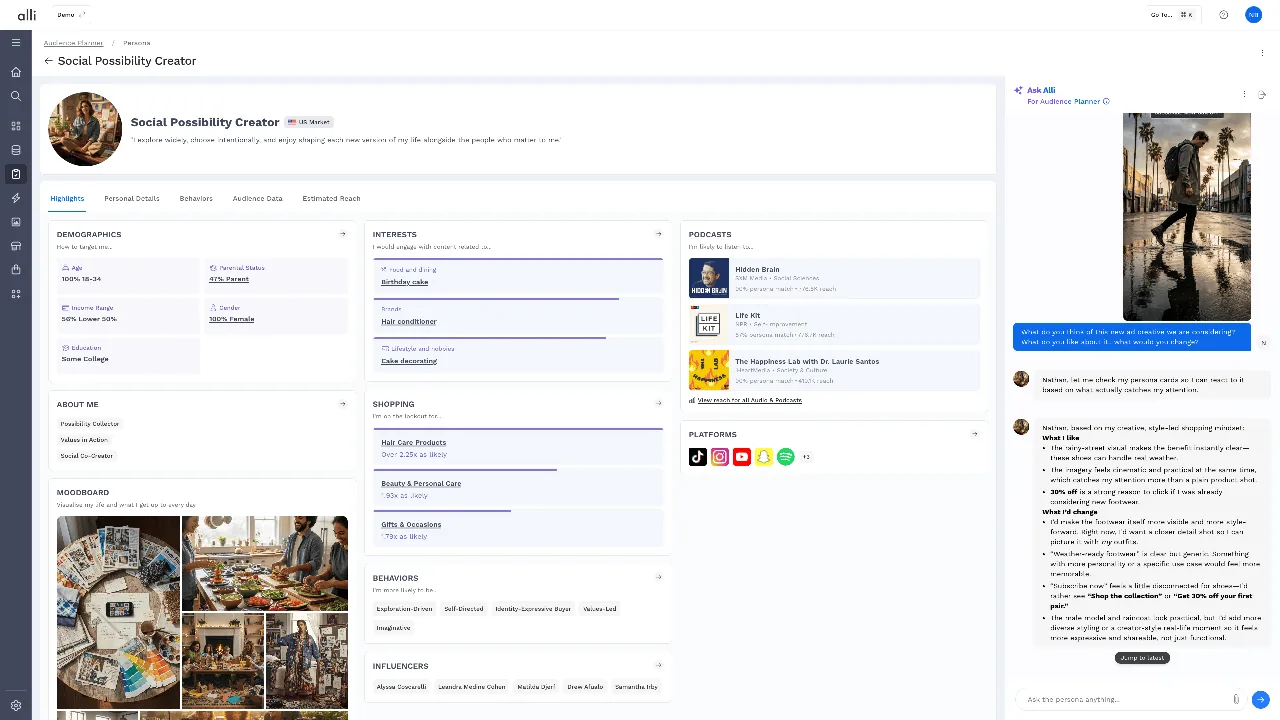
Get answers in the moment
Ask a question in plain language and get an answer from your governed data, during the meeting where it came up.
What changesFewer analyst requests, and no waiting a week for a report.
Explore Alli Intelligence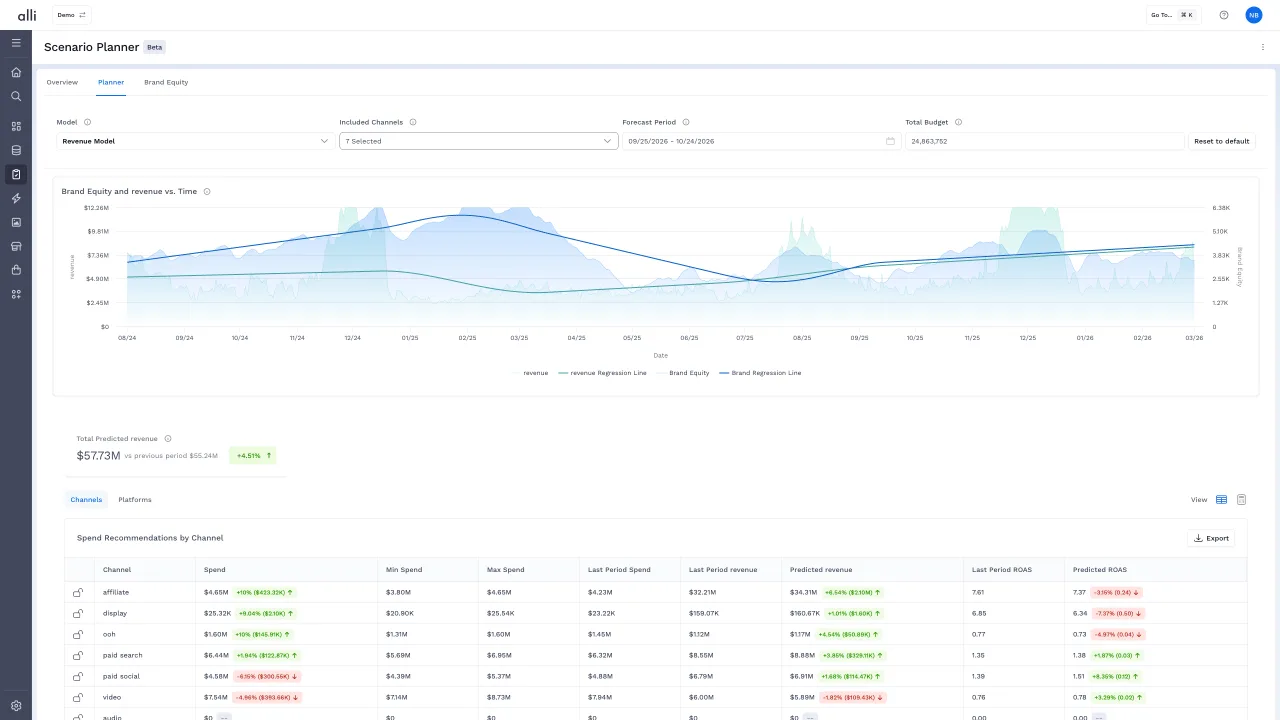
Plan with evidence
Build audiences from current behavior, model budgets before they're committed, and test creative before it runs.
What changesPlans you can explain to finance, not last year's split adjusted by a few points.
Explore Alli Planning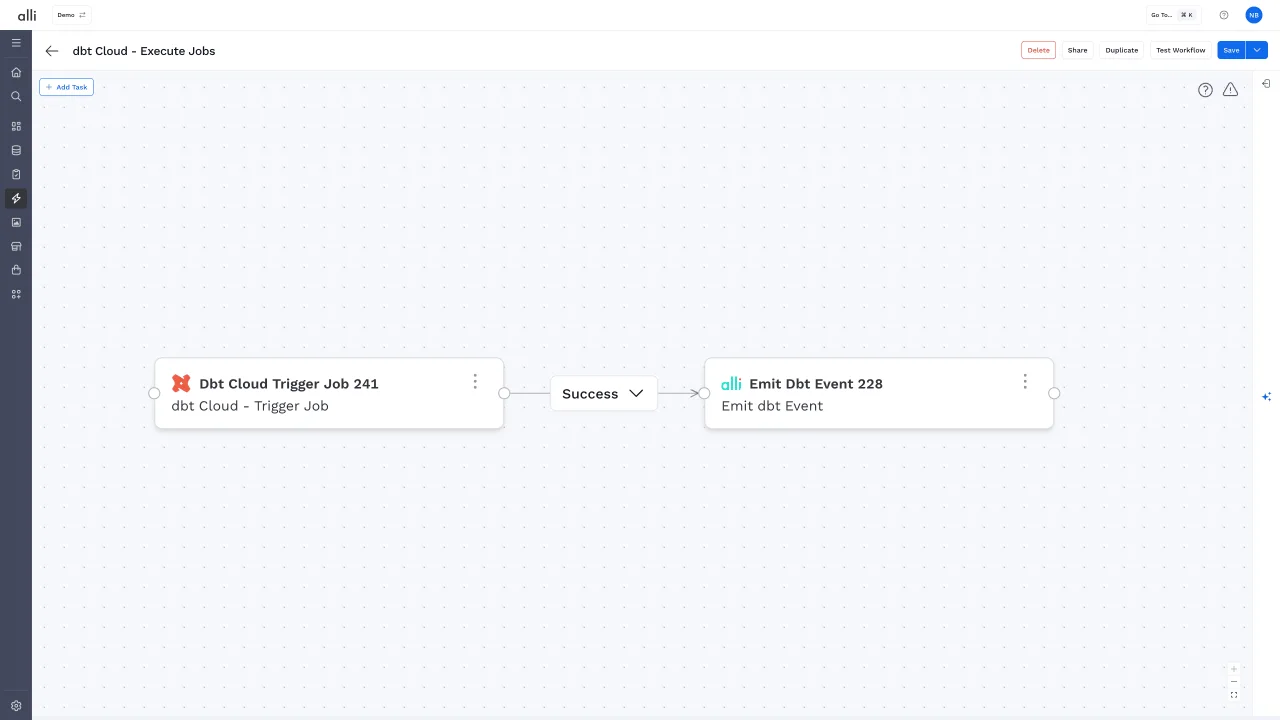
Act while the moment is open
Turn a decision into a workflow, creative at scale, or an app your team uses every day.
What changesLess time between seeing a signal and doing something about it.
Explore Alli Activate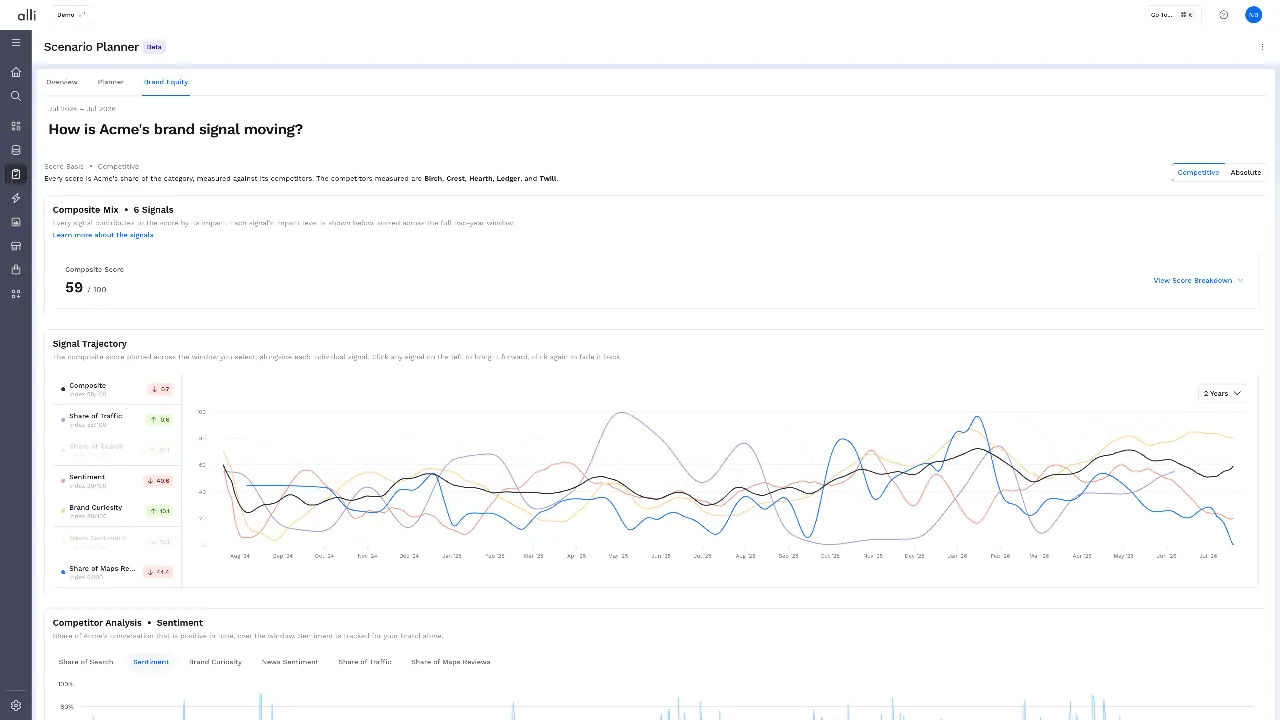
Prove what your investment returns
Connect brand and performance signals to business results, and model where the next dollar should go.
What changesBrand and performance compete for budget on the same evidence.
How Alli measures growth
Put AI to work safely
AI agents work from governed data, with people approving the decisions that matter.
What changesAI moves from pilots to everyday work without new risk.
How Alli earns trustFour pillars. One system you can see working.
Find the signal behind
every decision.
Shape strategy
around opportunity.
Move while the
moment is open.
What changes when Alli is in place?
Most enterprise teams have more data and tools than ever, but less time to use them. Here's what typically changes when data, decisions, and execution run in one system.
| Without a connected system | With Alli | |
|---|---|---|
| The numbers | Each platform and market reports its own version | One governed foundation with shared definitions |
| Getting an answer | File a request and wait for a report | Ask in plain language and get an answer from governed data |
| Planning | Last year's plan, adjusted in a spreadsheet | Audiences, budgets, and creative modeled from current signals |
| Execution | Manual handoffs between teams and tools | Workflows, creative production, and apps built on the same data |
| AI | Pilots and personal tools with no shared data or controls | Governed AI across the platform, with people approving key decisions |
| Proof | Results explained after the money is spent | Brand and performance linked to outcomes, with scenarios for the next dollar |
| Partner transparency | Reports and slide decks after the fact | Clients use the same platform and data PMG teams use |
What makes Alli different from other AI platforms?
Plenty of platforms can show an AI demo. Alli's difference is that it's already doing the work. It runs every PMG client and team today, it's been built and refined in production for more than 15 years, and clients use the same system PMG does.
Trusted. 100% adoption.
Alli powers every PMG client and every PMG team, every day. That's the best proof that a platform works: people choose to use it for real work, with real budgets, under real deadlines.
Tested. 15+ years in production.
Alli grew out of PMG's own client work and has evolved through every major shift in media platforms, privacy rules, and data infrastructure since. It's a mature enterprise platform, not a new AI wrapper or a beta product.
Tangible. Shared, not shown.
Clients get the same platform, data, and tools PMG teams use, not just the results. You can see the work, the logic behind it, and what it returned.
How does Alli compare to point solutions, internal builds, and agency platforms?
Most enterprise teams weigh three alternatives before choosing an operating system: adding more point solutions, building their own on a data cloud, or using a platform tied to an agency network. Each can work. Here's where each one tends to fall short, and how Alli is different.
| Point solutions | Internal build | Agency network platforms | Alli | |
|---|---|---|---|---|
| Scope | One task, like reporting, creative, or ETL | Usually data architecture first | Campaign management and agency workflow | Data, intelligence, planning, and activation in one system |
| Time to value | Fast for one task, slower across the stack | Often 12 to 24 months, plus upkeep | Depends on agency processes | Starts from proven templates and 15+ years of operating logic |
| Data | Mapped between tools, which creates drift | Strong, but hard for business teams to use | Can sit inside the agency's ecosystem | Builds on the data you own, in a governed foundation |
| AI | Separate in each tool | Built and maintained by your team | Tied to the network's models and data | Governed AI across the platform, on your data |
| Transparency | Each vendor reports on itself | Full, but you own the burden | Often limited to reports | Clients use the same platform PMG teams use |
| Maintenance | Many contracts and integrations | Your engineers maintain everything | Managed by the agency | API changes, connectors, and updates handled for you |
If you're adding another point solution
Ask whether it closes a gap or creates a new silo. Alli connects the tools you keep, so you can retire the ones you don't need.
If you're considering an internal build
Building the data infrastructure is the first step. Alli adds the marketing logic, workflows, and adoption patterns on top, so your engineers can focus on what's unique to your business.
If your agency has its own platform
Ask who owns the data, the logic, and the access. Alli builds on the data you already own, and you see the same platform PMG teams use.
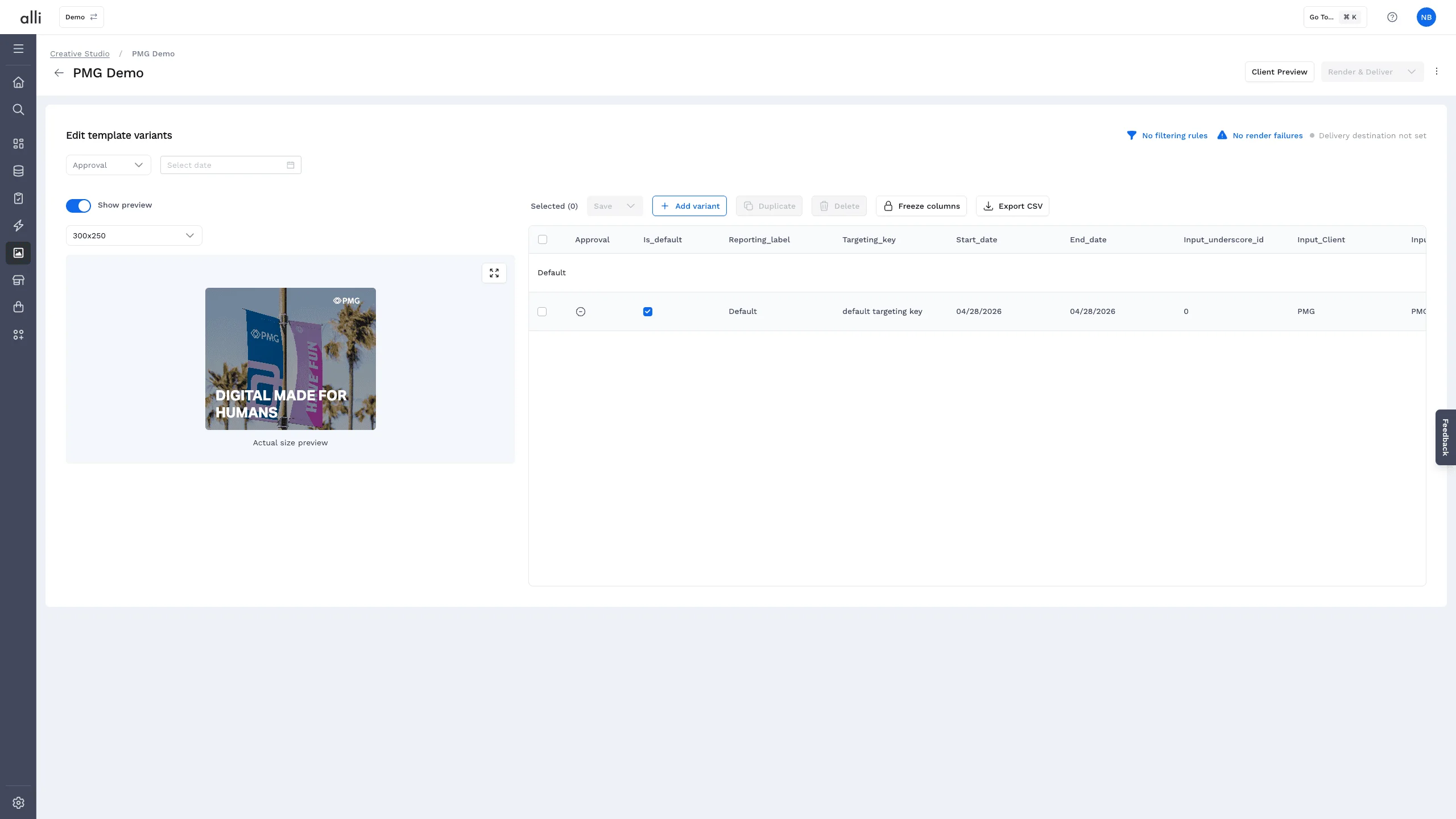
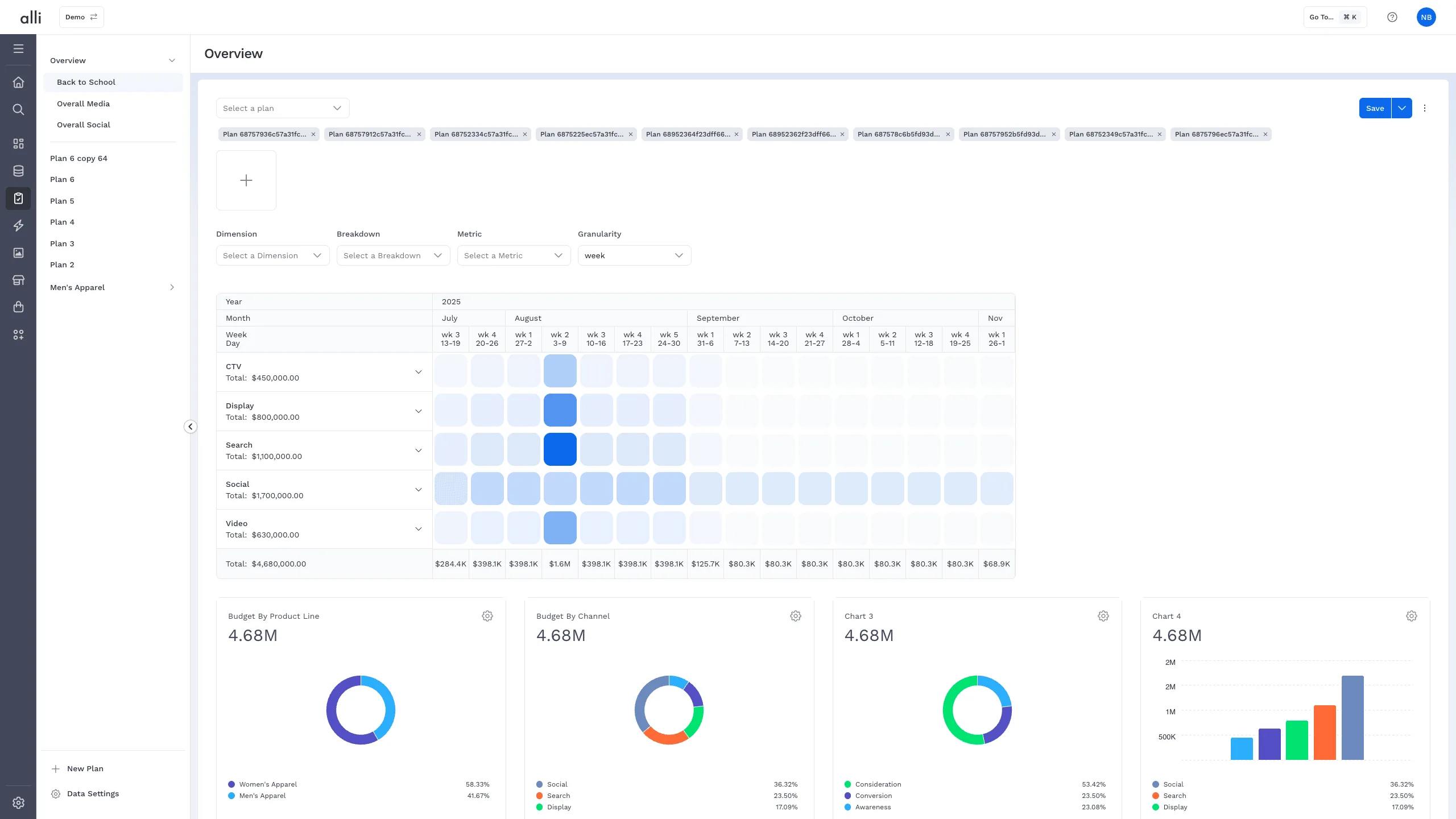
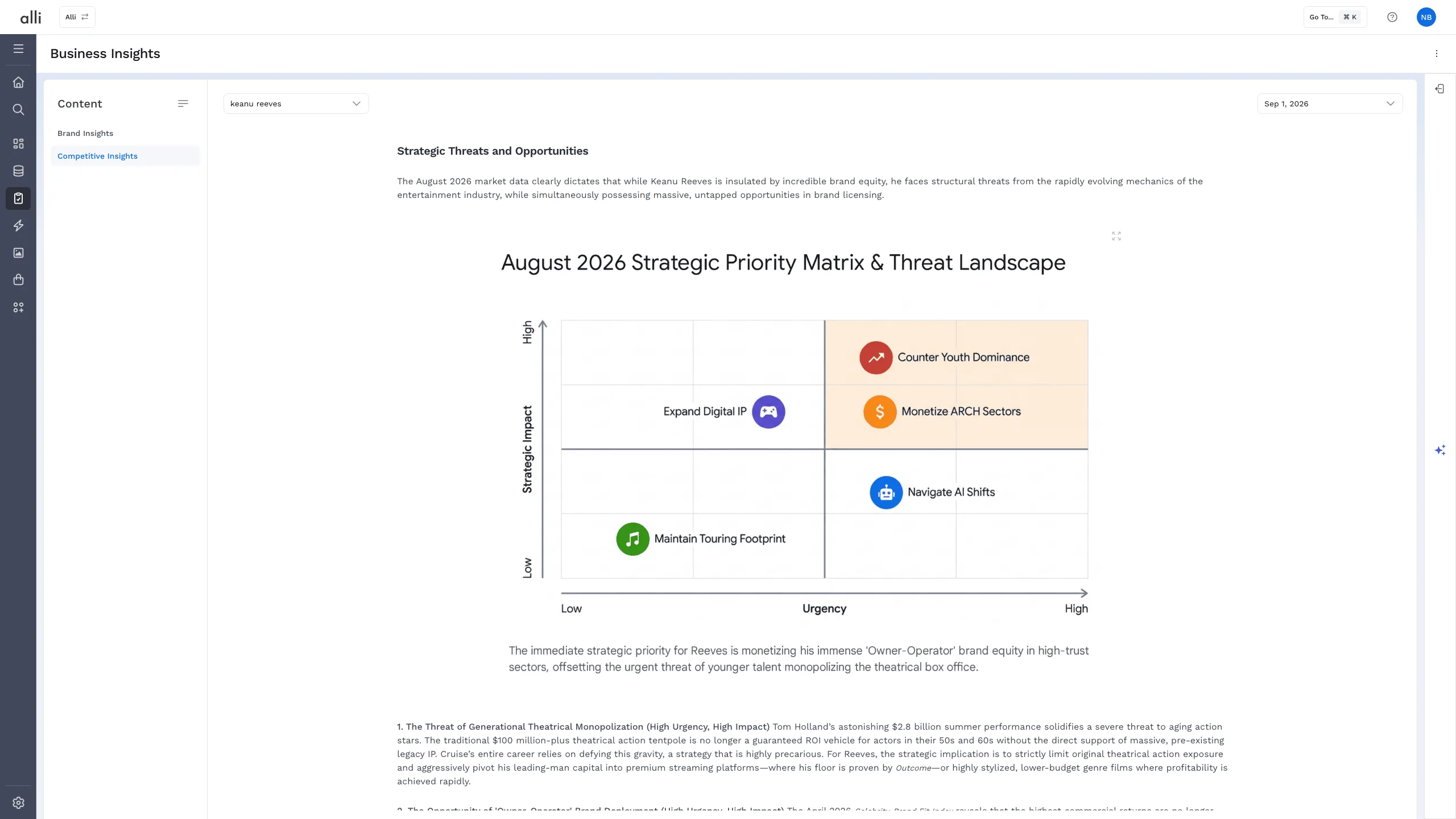
What can Alli do for your team?
Alli is used across the business, by people who need the same numbers for different decisions.
For marketing leaders
The shiftFrom reviewing last quarter to leading the next one.
See how spend, creative, and brand connect to business results, and walk into budget conversations with evidence.
For finance partners
The shiftFrom questioning marketing's numbers to planning with them.
Work from the same KPI definitions marketing uses, and see the revenue impact of a budget change before it's approved.
For media and operations teams
The shiftFrom manual campaign management to managing systems.
Automate reporting and QA, catch issues early, and keep plans tied to actual spend.
For creative and content teams
The shiftFrom making in isolation to making with evidence.
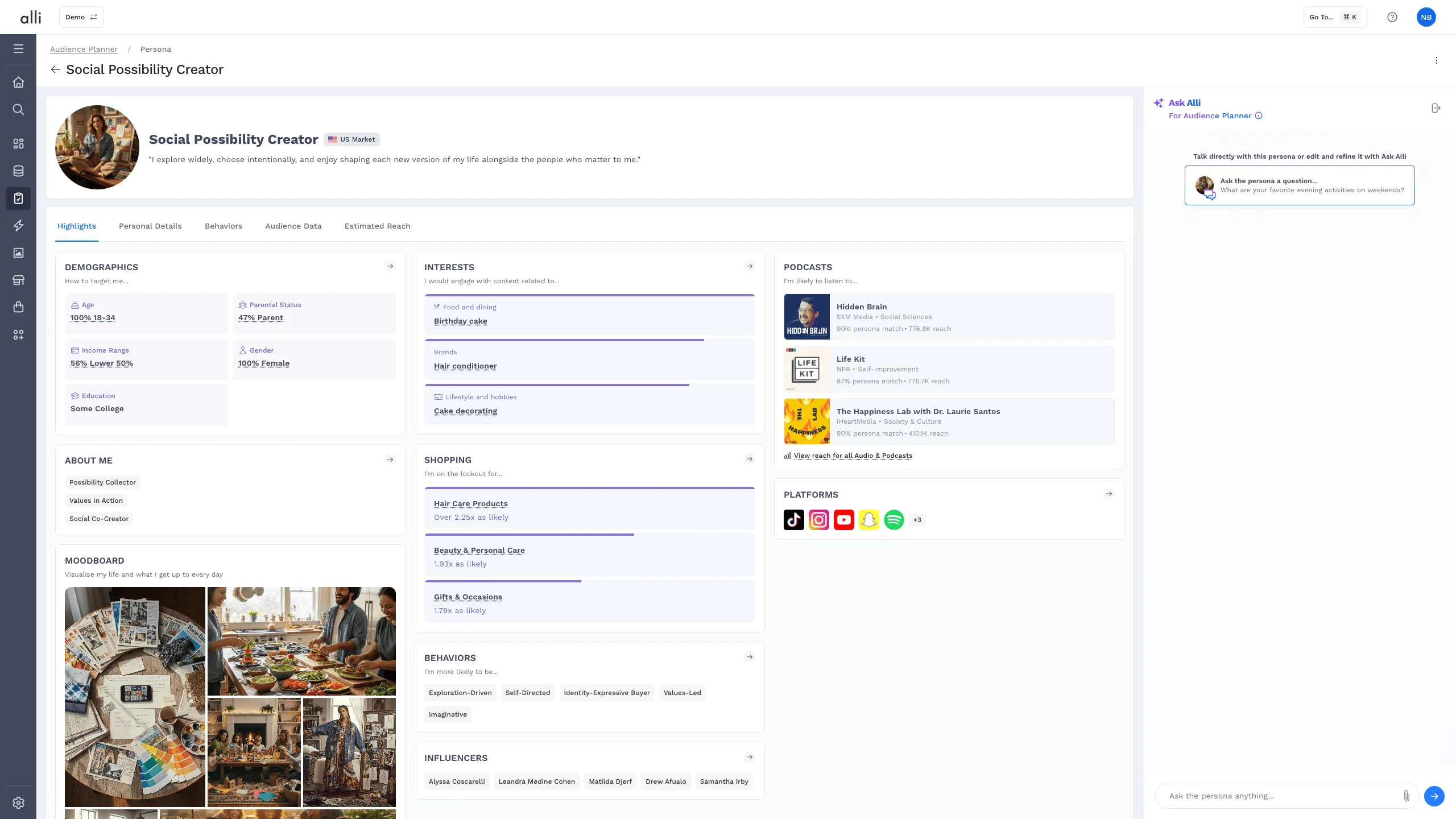
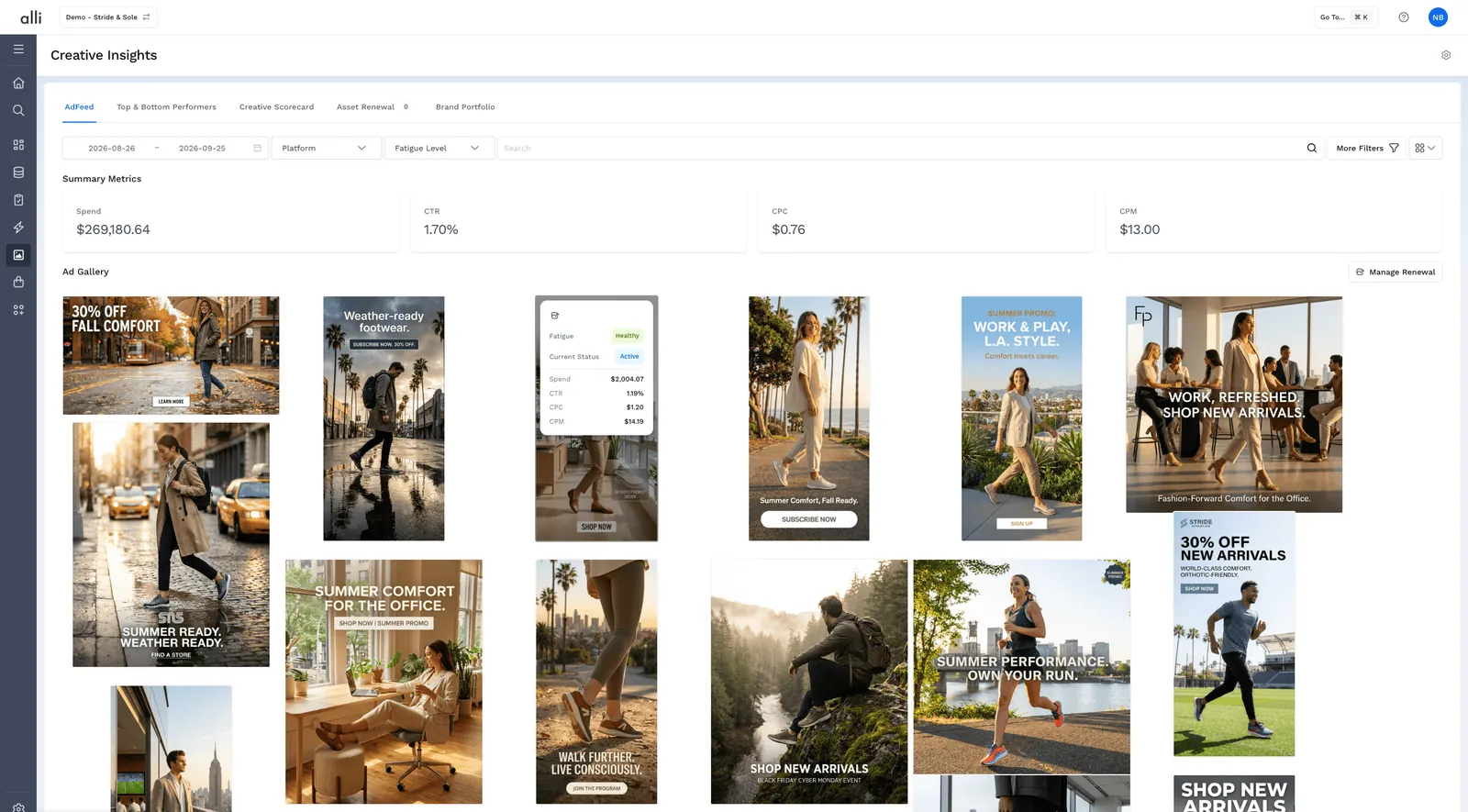
See which creative choices work, test video before launch, and produce versions at scale without losing the brand.
For data and analytics teams
The shiftFrom reconciling data to building on it.
Spend less time on connectors and mapping, and more time on analysis, modeling, and decision support.
For IT and security teams
The shiftFrom blocking AI to governing it.
Give teams AI with per-user access, secured credentials, and agents that follow existing permissions.
Current SOC 2 Type II report for the Alli platform; security program aligned with NIST CSF. See security details
Which industries is Alli built for?
Alli fits complex organizations with many markets, channels, brands, or data sources. It's especially strong in industries where demand changes quickly and brand and performance are closely linked.
Retail and ecommerce
The problem: inventory, pricing, and promotions change daily, but the data to respond sits in separate systems.
What Alli doesConnects retail signals to creative, media, and measurement, so investment follows demand and ads stop promoting what's out of stock.
Travel and hospitality
The problem: demand is volatile, inventory is perishable, and local pricing and creative take heavy coordination.
What Alli doesAligns media and creative with availability and booking signals, so teams don't miss demand windows.
Technology and media
The problem: huge data volumes across complex ecosystems, but no shared view teams trust for acquisition and retention decisions.
What Alli doesUnifies fragmented platforms into intelligence teams can act on, at enterprise scale.
Financial services and regulated industries
The problem: teams need speed, but also governance, auditability, and security.
What Alli doesBuilds governance into the workflow, with clear records of data, rules, actions, and spend.
What results do brands see with Alli?

lift in brand preference among UAE investors.
Read the FXTM story
of accounts unified around one shared data foundation.
Read the Nike story
partners aligned through one launch view, with a 21% lift in branded search.
Read the Peloton story
sales forecast after acting on an emerging trend.
Read the Jazwares storyExplore why teams choose Alli
Data You Can Trust
Teams only use tools they trust, and trust starts with accurate data. Alli keeps its data foundation deterministic and traceable, and puts AI to work alongside your experts at every step.
See how Alli earns trustBuilt by PMG
Alli started as the system PMG needed for its own client work and has been in production for more than 15 years. It's built by the practitioners who use it every day, and it runs every PMG client and team.
Read the story behind AlliThe Alli Platform Explained
Alli connects, governs, and activates your data across four pillars: Data, Intelligence, Planning, and Activate. See how each pillar works, how the products connect, and how results feed the next decision.
See how the Alli platform worksMeasurable Growth
Alli connects brand and performance signals to business outcomes, so you can prove what marketing returned and model where the next dollar should go.
See how Alli proves impactThe ideas behind Alli
- What is a business growth platform?One connected system that links a business's data, intelligence, planning, and execution on a shared foundation, so every decision and action builds on the last.
- What is the difference between point solutions and a connected platform?The choice between separate single-purpose tools, each with its own data and logic, and one platform where products share a foundation and hand work to each other.
- What is decision intelligence?Using data, analytics, and AI to support specific business decisions, connecting what the data shows to what a team should do next.
- What is governed AI?AI that runs on governed data, within defined permissions, with audit trails and human approval, so its answers and actions can be checked and trusted.
Why Alli FAQ
The questions teams ask when they're deciding whether Alli is right for them.
What can Alli do for my business?
Alli connects your data, decisions, and execution in one governed system. Teams work from the same numbers, get answers in plain language, plan budgets and creative from evidence, automate recurring work, and connect results to business outcomes. The practical effect is faster decisions that are easier to defend, with less manual work in between.
How is Alli different from a set of point solutions?
Point solutions each handle one task, like reporting, creative production, or data integration, and teams move data and decisions between them by hand. Alli connects those tasks on one data foundation, so a finding in one place can shape a plan and an action in another without exports or reconciliation.
Should we build our own platform instead?
You can, and some teams do. Internal builds often take 12 to 24 months and need ongoing maintenance as platforms and APIs change. Alli builds on the data infrastructure you already have and adds 15+ years of marketing logic, workflows, and templates on top, so your engineers can focus on what's unique to your business.
Does Alli replace our existing tools or data warehouse?
No. Alli works alongside the systems you already use, including data clouds like Snowflake, BigQuery, and Databricks, and the media platforms your teams run on. It adds a governed layer that connects them. Many teams then retire point solutions that Alli covers, at a pace that fits their contracts.
Do we need to be a PMG client to use Alli?
Yes. Alli is currently available to PMG clients and partners. Every PMG client relationship runs on Alli, and clients use the same platform PMG's teams use, alongside PMG's strategists, analysts, and creatives. That combination of platform and practitioners is how Alli delivers results. To get started, talk to PMG.
How quickly can a team see value from Alli?
Customers are live on the platform within weeks and can start using it from day one. Teams usually begin with one high-value decision, like a recurring performance report or a budget plan that's hard to defend. Because Alli brings proven templates, connectors, and workflows from 15+ years of PMG practice, teams don't start from zero.
How does Alli keep AI safe and accurate?
Alli keeps its data foundation deterministic and governed, so AI never generates or guesses the numbers underneath. AI runs in the products on top, reading from that same governed source. Decisions that commit budget, launch campaigns, or ship creative pause for a person to approve them.
How does Alli help prove marketing ROI?
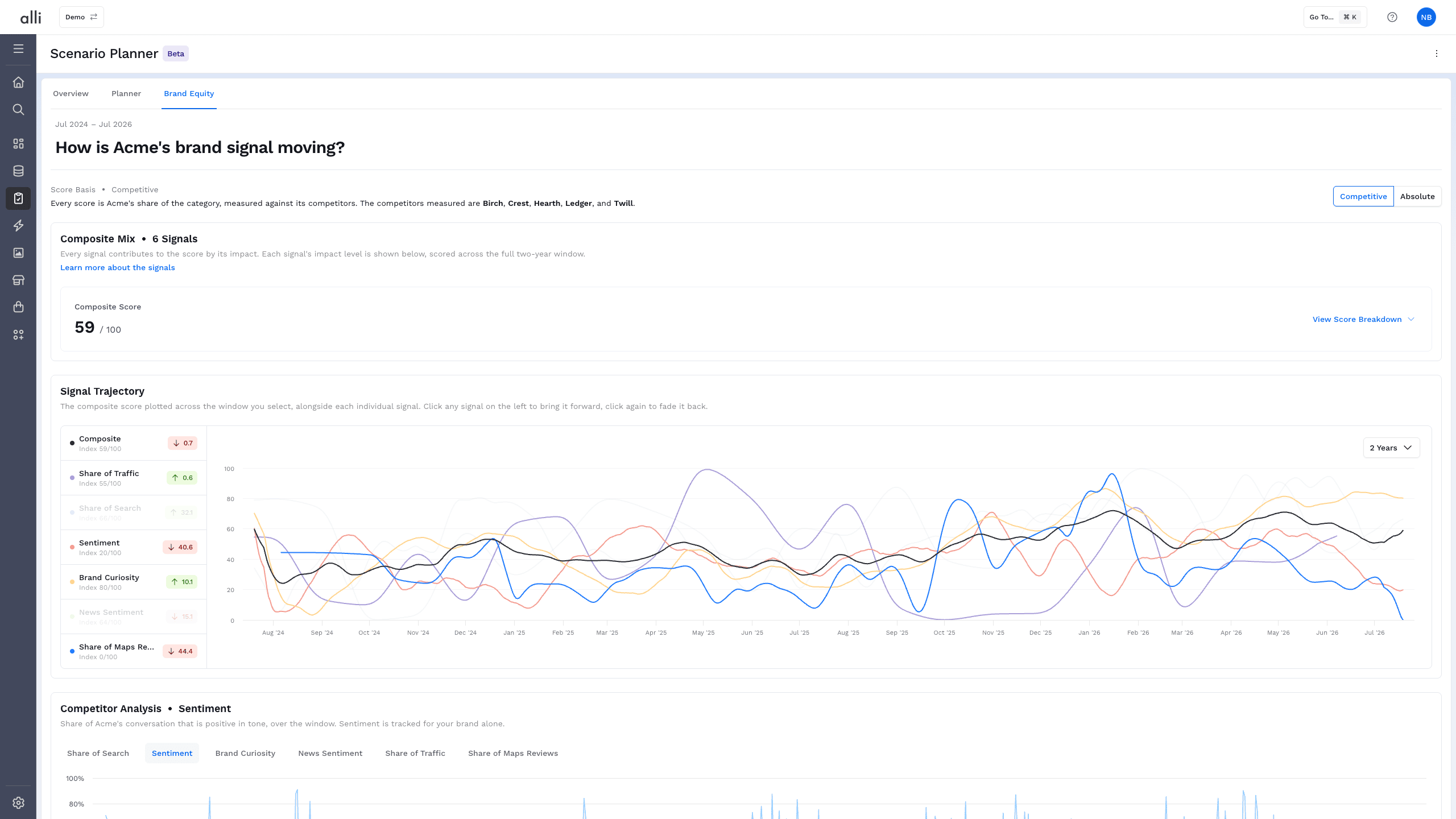
Alli connects brand signals, media performance, and sales data in one system. Alli Brand Equity turns brand strength into a weekly score, and Alli Scenario Planner models the revenue impact of budget changes before they're made. Together they show what marketing returned and where the next dollar should go.
Who uses Alli inside a company?
Marketing leaders, media and operations teams, creative teams, data and analytics teams, finance partners, and IT and security teams all use Alli for different decisions. They share one data foundation, so marketing, finance, and leadership work from the same numbers instead of reconciling separate reports.
What kind of company is Alli built for?
Alli fits complex organizations with many markets, channels, brands, or data sources, usually global enterprises or fast-growing companies with significant cross-channel investment. It's especially strong in retail, travel, technology, and financial services. A business with one channel in one region may not need a full operating system yet.
See what Alli can do with your data.
Skip the deck. Bring a real question from your business, and we'll answer it live in Alli, on real data.