

Nathan Barling
Product Marketing Principal
Nathan leads product marketing at PMG. He’s spent over 20 years helping everyone from small startups to some of the world's biggest brands grow. These days, he’s focused on using AI and adaptive strategies to help marketing teams move faster. Most of his work is about building systems that get product, sales, and marketing teams on the same page so they can focus on growth.
Articles by Nathan 79
What is share of shelf?
Share of shelf is how much of a category's visibility a brand holds at a retailer, in store or online. Learn how it is measured and why it matters.
Read the article
What is a metrics layer?
A metrics layer defines each KPI once, with its formula, filters, and grain, so every tool calculates it the same way. See how it differs from a semantic layer.
Read the article
What is data freshness?
Data freshness is how recently data was updated compared with the activity it describes. Learn how to measure it and why stale data leads to bad calls.
Read the article
What is the Model Context Protocol (MCP)?
The Model Context Protocol (MCP) is an open standard for connecting AI applications to tools and data. Learn how it works and why it was created.
Read the article
What is a unified data platform for marketing?
A unified data platform for marketing connects every channel, region, and business system with shared definitions. Learn how it works and why it matters.
Read the article
What is server-side tracking?
Server-side tracking sends conversion data from your own server to ad platforms instead of a browser pixel. Learn how it works and why it matters now.
Read the article
What is marketing operations (MOps)?
Marketing operations (MOps) is the people, processes, data, and tools that keep marketing running. Learn what MOps teams do and where AI now helps.
Read the article
What is share of search?
Share of search is a brand's share of branded search volume in its category. Learn how to calculate it, where it works best, and where it falls short.
Read the article
What is plan vs. actuals in media planning?
Plan vs. actuals compares planned spend and results with what really happened, so teams can see variance early. Learn how it works and why it matters.
Read the article
What is Bayesian marketing mix modeling?
Bayesian marketing mix modeling combines prior knowledge with data and reports a range of likely results. Learn how it works and how it compares.
Read the article
What is anomaly detection in marketing?
Anomaly detection uses statistical models to flag when a marketing metric moves outside its normal pattern. Learn how it works and why it beats thresholds.
Read the article
What is generative engine optimization (GEO)?
Generative engine optimization (GEO) helps a brand get found, trusted, and cited in AI-generated answers. Learn how GEO works and how it differs from SEO.
Read the article
What is consent mode?
Consent mode adjusts how Google tags behave based on each visitor's consent choices. Learn how it works, basic vs. advanced, and why it matters.
Read the article
What is retrieval-augmented generation (RAG)?
Retrieval-augmented generation (RAG) has AI retrieve relevant, trusted information before answering. Learn how RAG works, its limits, and how to use it.
Read the article
What is zero-click search?
Zero-click search is when a search ends on the results page because the answer is already there. Learn what drives it and how brands measure visibility.
Read the article
What are AI guardrails?
AI guardrails are the controls that keep AI inside safe, approved limits: data, access, actions, logging, and approval. Learn the main types and examples.
Read the article
What is marketing automation with AI?
Marketing automation with AI builds and runs multi-step marketing work from a plain-language description. Learn how it differs from rule-based tools.
Read the article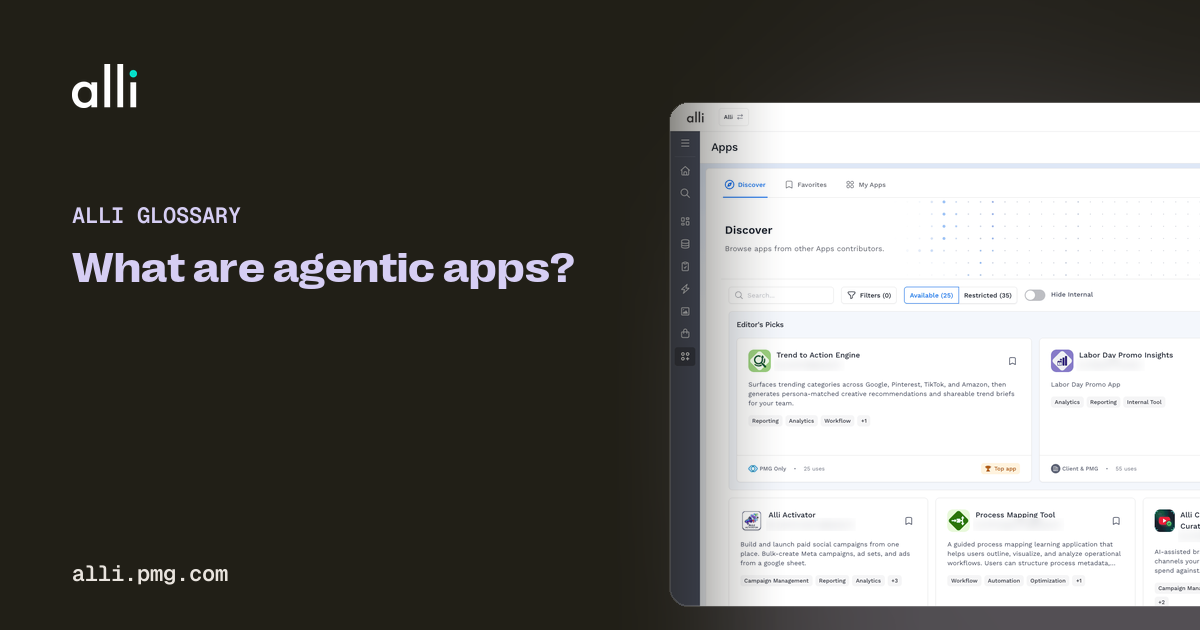
What are agentic apps?
An agentic app is software with an AI agent inside that does multi-step work behind a normal interface. Learn how agentic apps differ from chatbots.
Read the article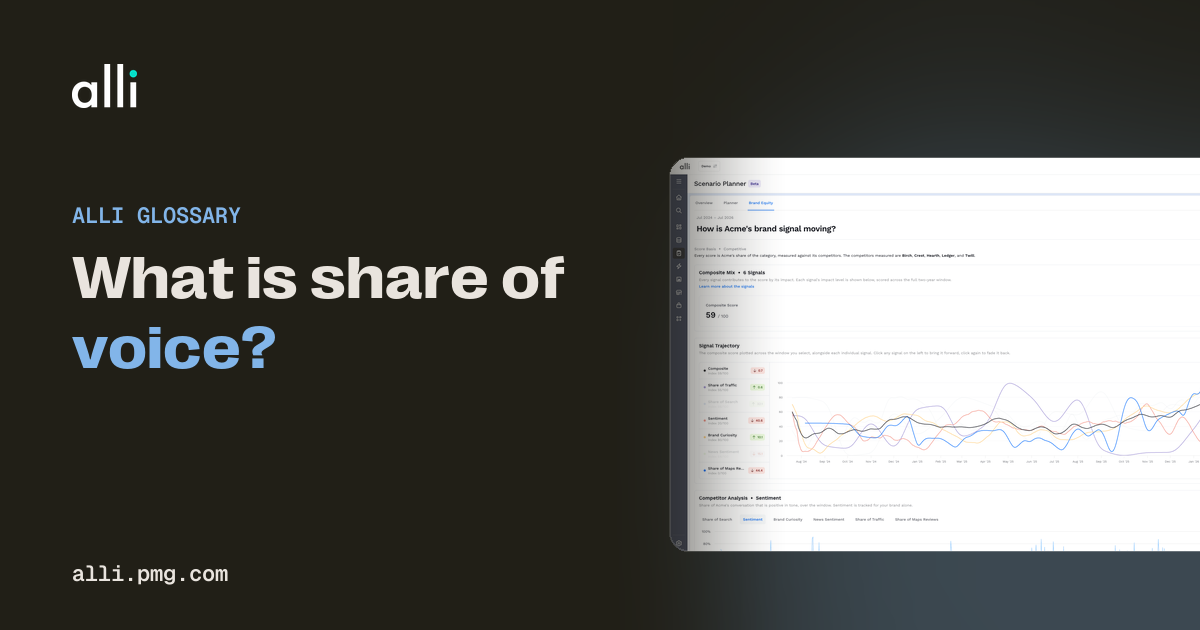
What is share of voice?
Share of voice is a brand's share of advertising, media presence, or conversation in its category. Learn how to calculate it and how it relates to growth.
Read the article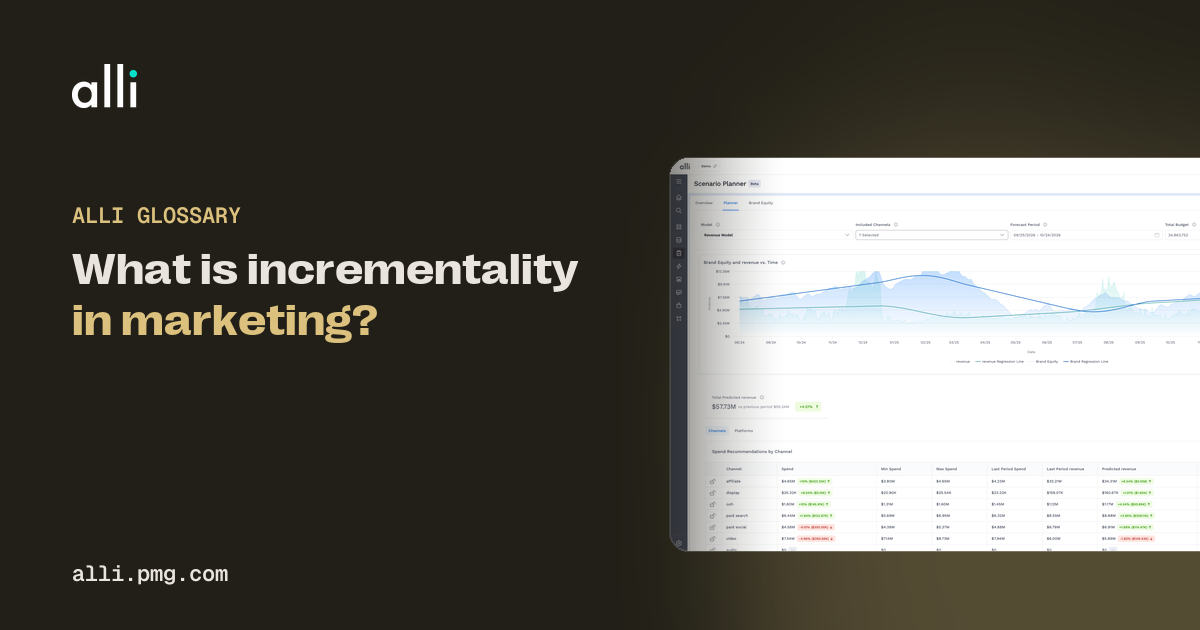
What is incrementality in marketing?
Incrementality is the extra result marketing caused beyond what would have happened anyway. Learn how lift is measured and why it beats raw attribution.
Read the article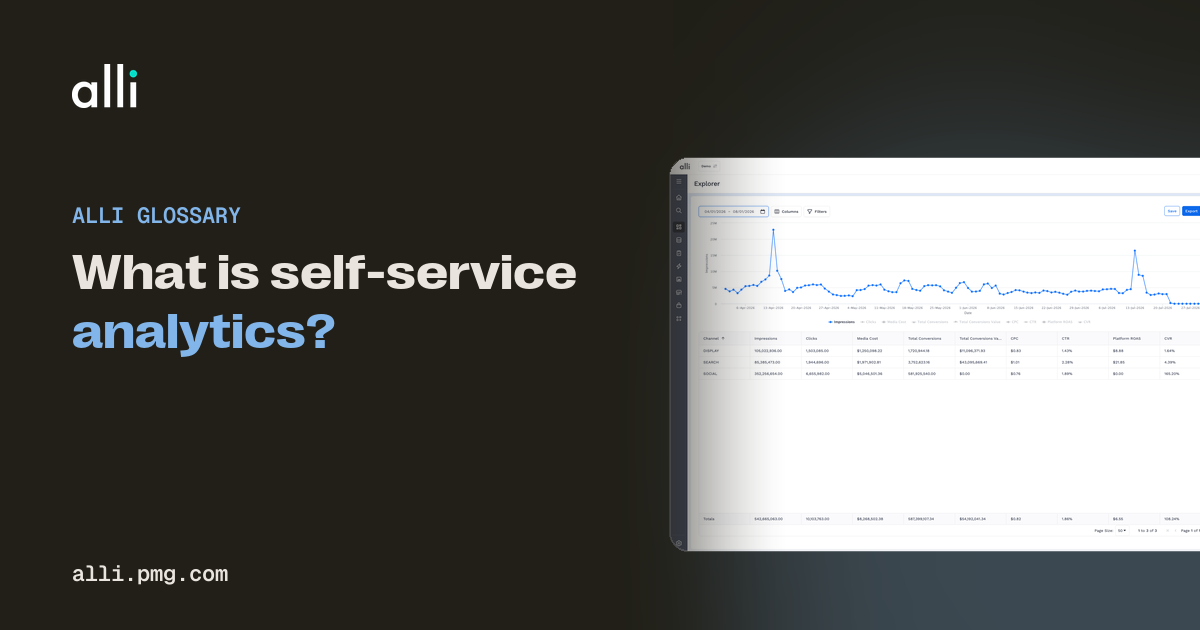
What is self-service analytics?
Self-service analytics lets business users explore data and answer their own questions without code or an analyst. Learn how it works and what it needs.
Read the article
What is marginal ROAS?
Marginal ROAS is the revenue from the next dollar of ad spend, not the average dollar. Learn how to calculate it and why it drives smarter budget moves.
Read the article
What is the difference between multi-touch and last-click attribution?
Last-click attribution credits only the final touchpoint; multi-touch spreads credit across the journey. Compare the two, with examples and tradeoffs.
Read the article
What is brand tracking?
Brand tracking measures brand health over time, such as awareness, perception, and preference. Compare survey trackers with signal-based brand measurement.
Read the article
What is budget pacing in advertising?
Budget pacing tracks how fast a campaign spends against its budget and timeline. Learn how to calculate pacing, spot problems early, and fix them.
Read the article
What is a single source of truth?
A single source of truth is the agreed, governed version of data and definitions every team uses. Learn what it really takes and why it often breaks.
Read the article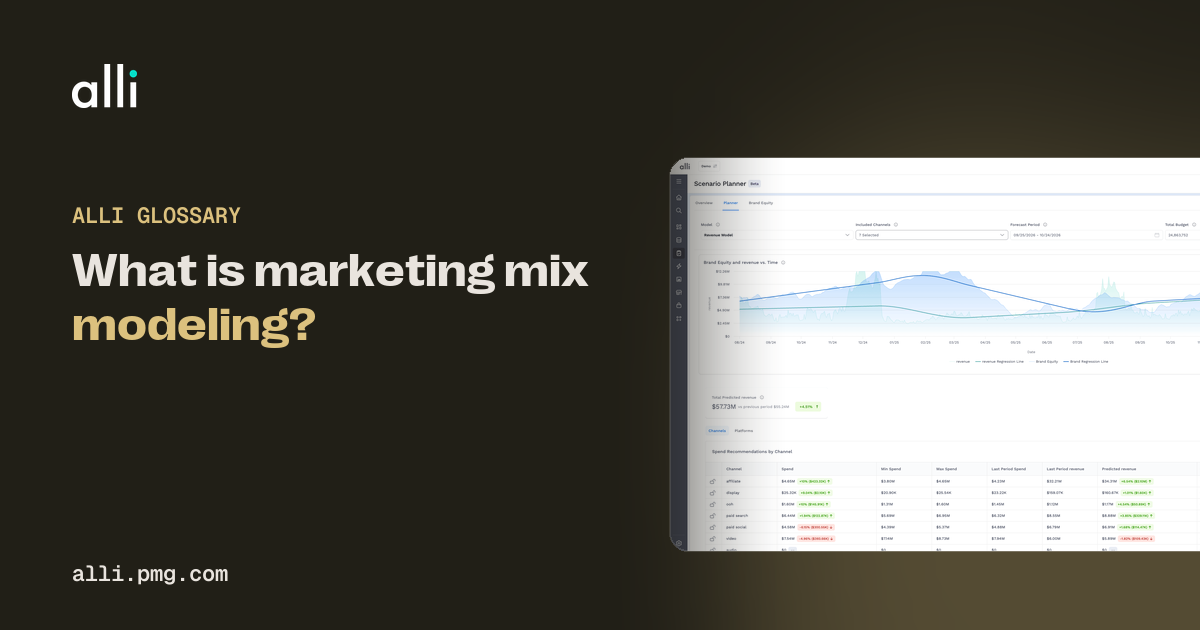
What is marketing mix modeling?
Marketing mix modeling (MMM) estimates how each channel and outside factor contributed to sales. Learn how MMM works, its limits, and what comes next.
Read the article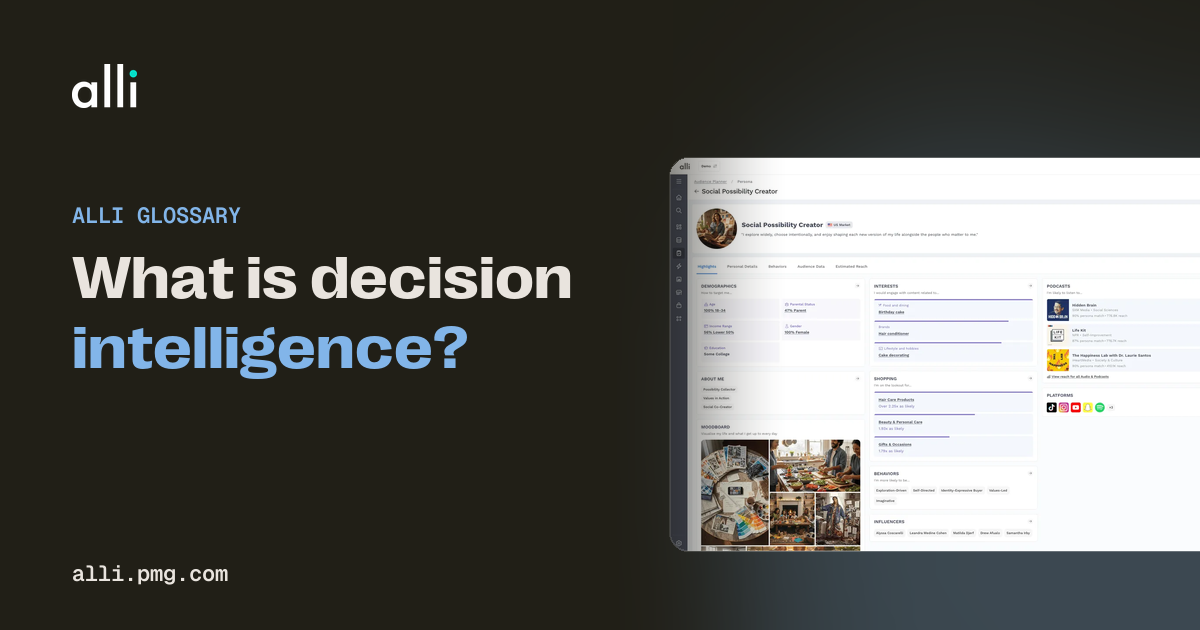
What is decision intelligence?
Decision intelligence turns data into answers people can act on while a decision is still open. Learn how it works and how it differs from BI.
Read the article
What is a data clean room?
A data clean room lets companies match and analyze shared data without exposing raw customer records. Learn how clean rooms work and when to use one.
Read the article
What is an MCP server?
An MCP server gives AI assistants and agents structured access to a system's data and actions through the Model Context Protocol. See how it works.
Read the article
What is Share of LLM Presence?
Share of LLM Presence measures how AI models describe, rank, and recommend your brand against competitors. Learn why AI visibility matters now.
Read the article
What is a business growth platform?
A business growth platform connects data, intelligence, planning, and execution in one governed system. Learn how it differs from a stack of tools.
Read the article
What is zero-party data?
Zero-party data is information customers intentionally share with a brand, like preferences and plans. See examples and how it differs from first-party data.
Read the article
What is pre-launch creative testing?
Pre-launch creative testing evaluates an ad before it goes live, so teams can improve it without spending media to learn. Learn how ad pretesting works.
Read the article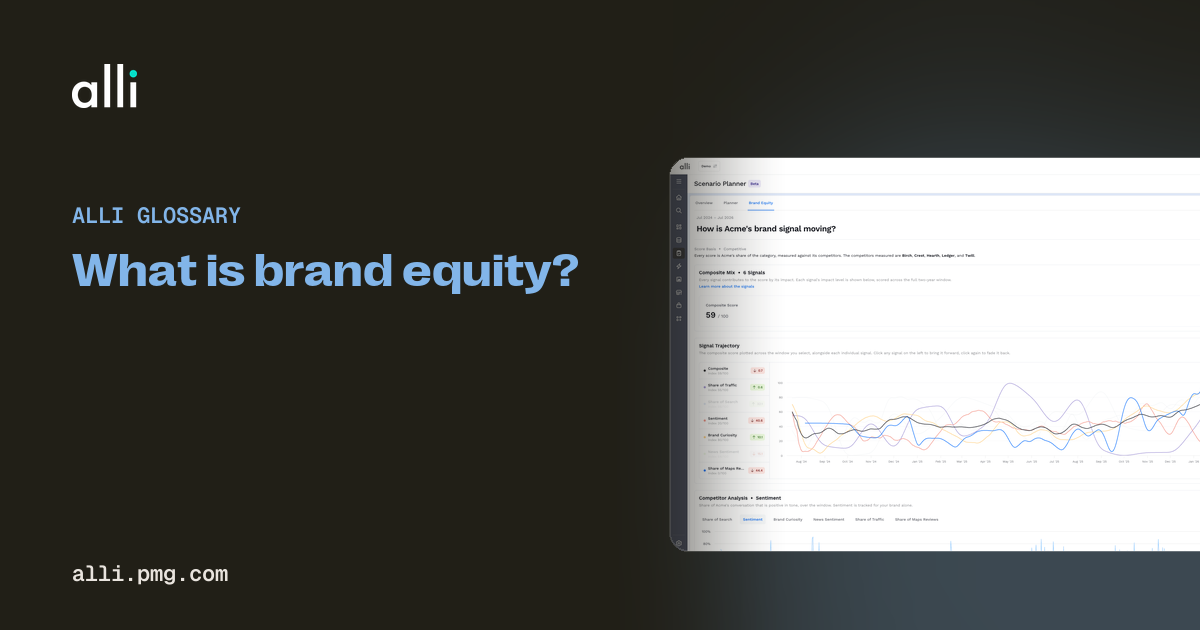
What is brand equity?
Brand equity is the value a brand adds beyond the product itself. Learn what drives it, how it is measured, and how it connects to growth and revenue.
Read the article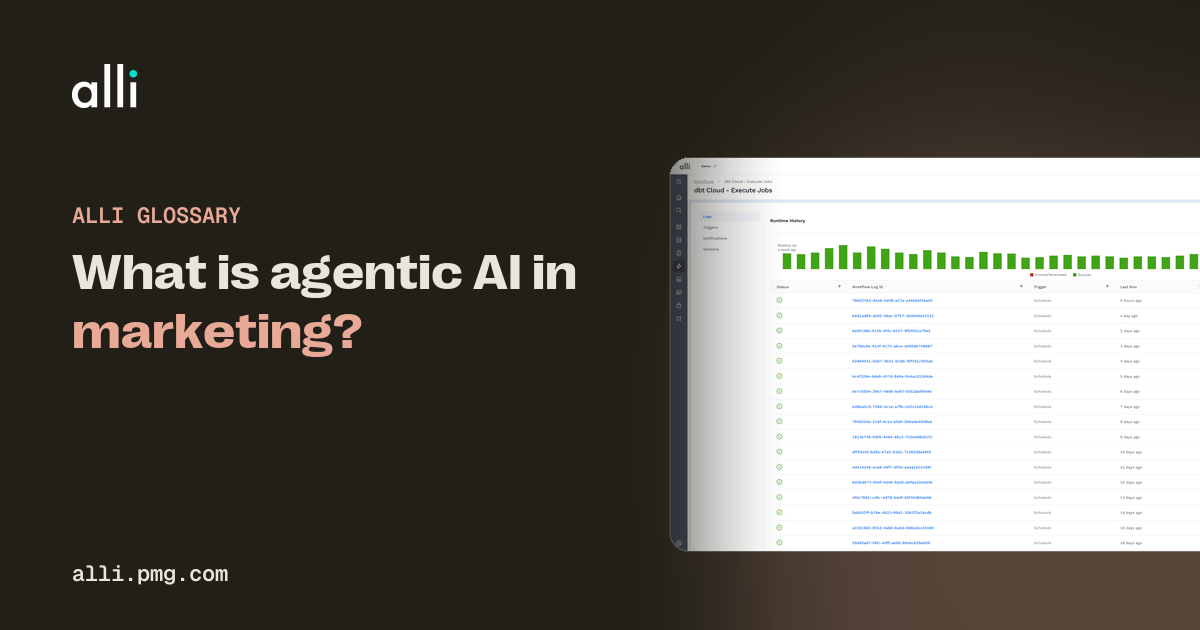
What is agentic AI in marketing?
Agentic AI in marketing uses AI agents to research, plan, produce, and monitor work across tools, with people in control. See how it works, with examples.
Read the article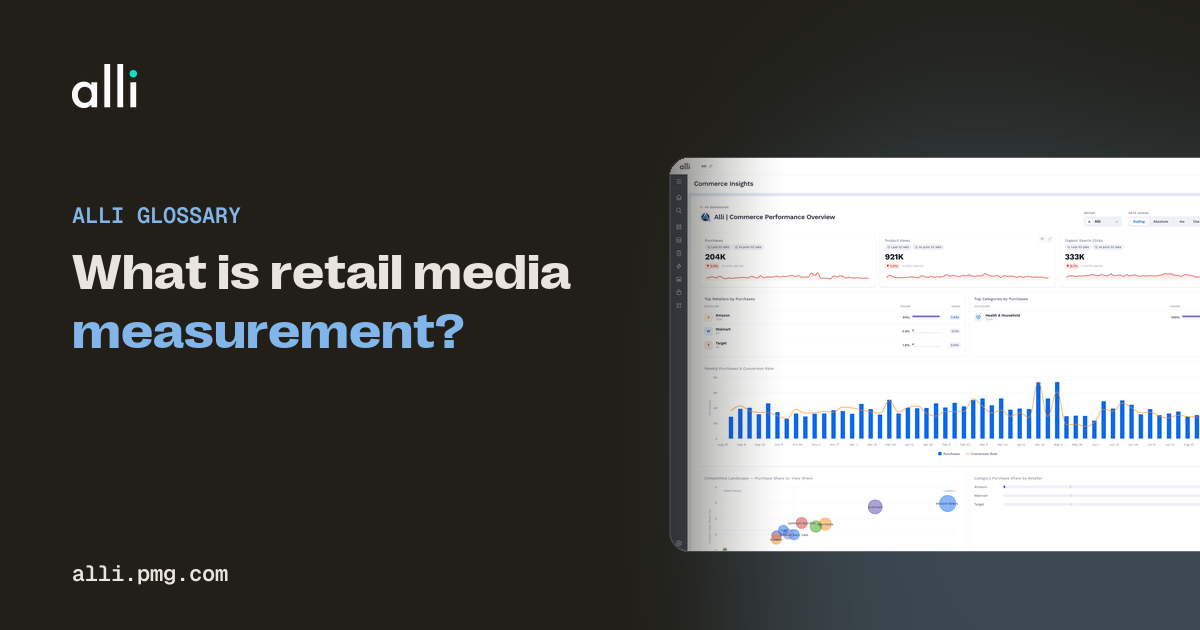
What is retail media measurement?
Retail media measurement shows how ads on retailer sites drive views, sales, and share. Learn the key metrics, the common gaps, and how to read results.
Read the article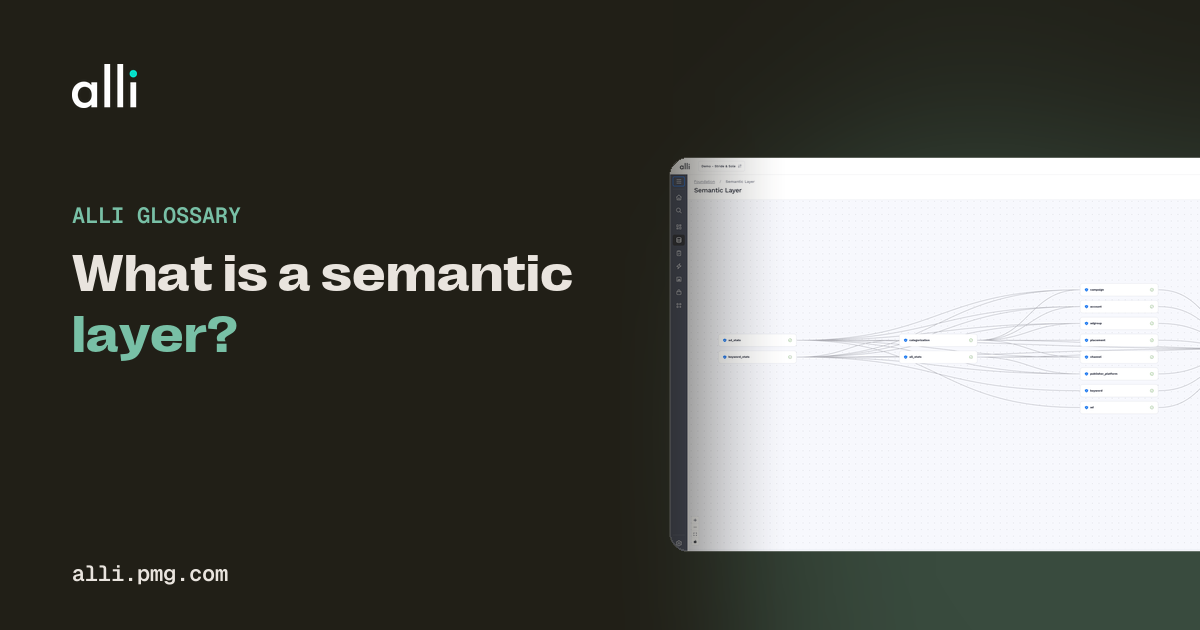
What is a semantic layer?
A semantic layer is a shared set of business definitions between raw data and the tools that use it. Learn how it works, with examples and a comparison.
Read the article
What is marketing ETL?
Marketing ETL extracts data from ad platforms and marketing tools, transforms it, and loads it for analysis. Learn how it works and where it breaks.
Read the article
What are AI Overviews?
AI Overviews are Google's AI-generated summaries at the top of some search results. Learn how they work, how they pick sources, and what they mean for brands.
Read the article
What is composable martech?
Composable martech builds a marketing stack from a stable core plus modular tools you add or swap as strategy changes. Learn the pros, cons, and examples.
Read the article
What is competitive intelligence?
Competitive intelligence is the ongoing tracking of competitors and market shifts to make better decisions. Learn how it works and how it differs from research.
Read the article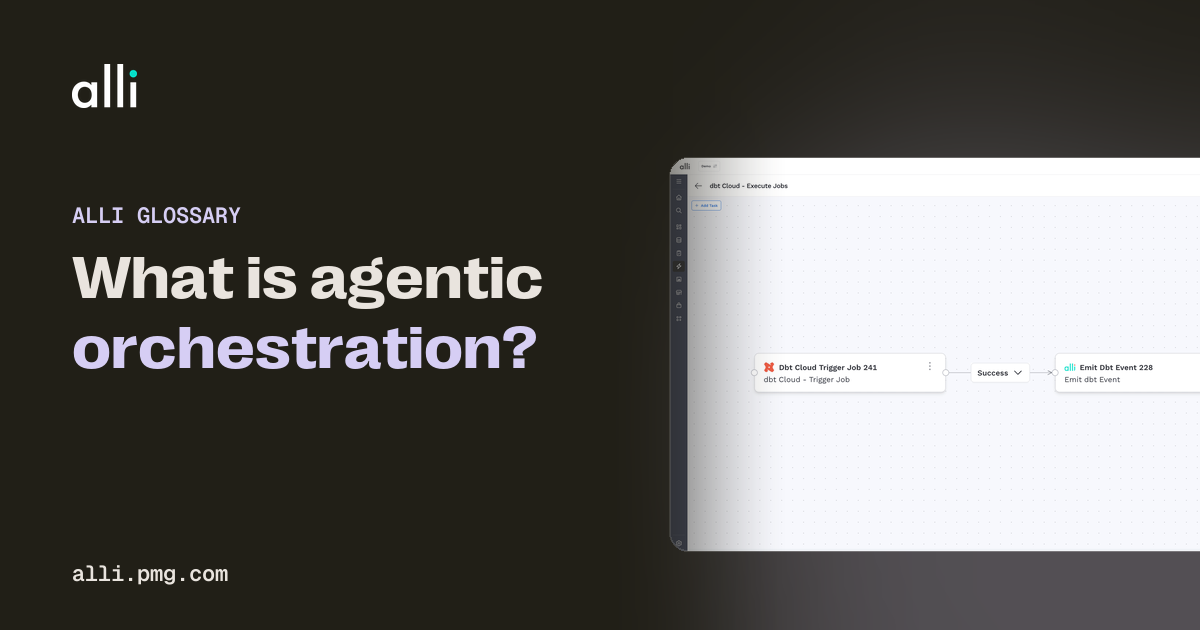
What is agentic orchestration?
Agentic orchestration is when AI agents in different tools hand work to one another, with people approving key steps. Learn how it works, with examples.
Read the article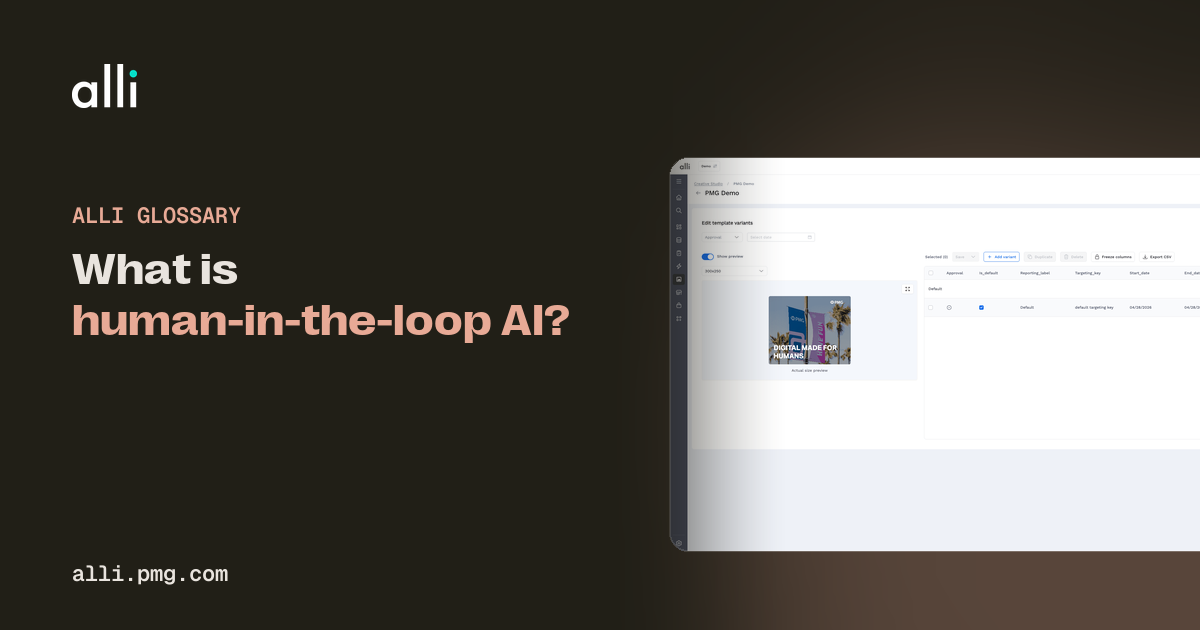
What is human-in-the-loop AI?
Human-in-the-loop AI keeps people involved where judgment matters, from framing questions to approving actions. Learn how it works, with examples.
Read the article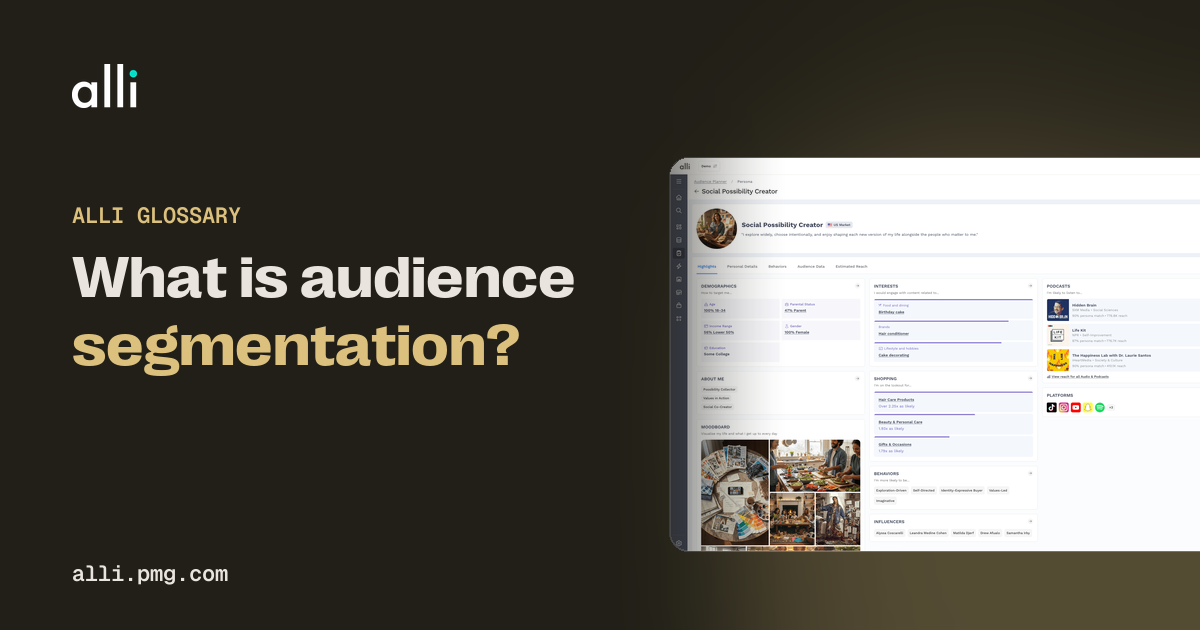
What is audience segmentation?
Audience segmentation divides a market into groups with shared traits or behaviors. Learn the main types, examples, and how segments differ from personas.
Read the article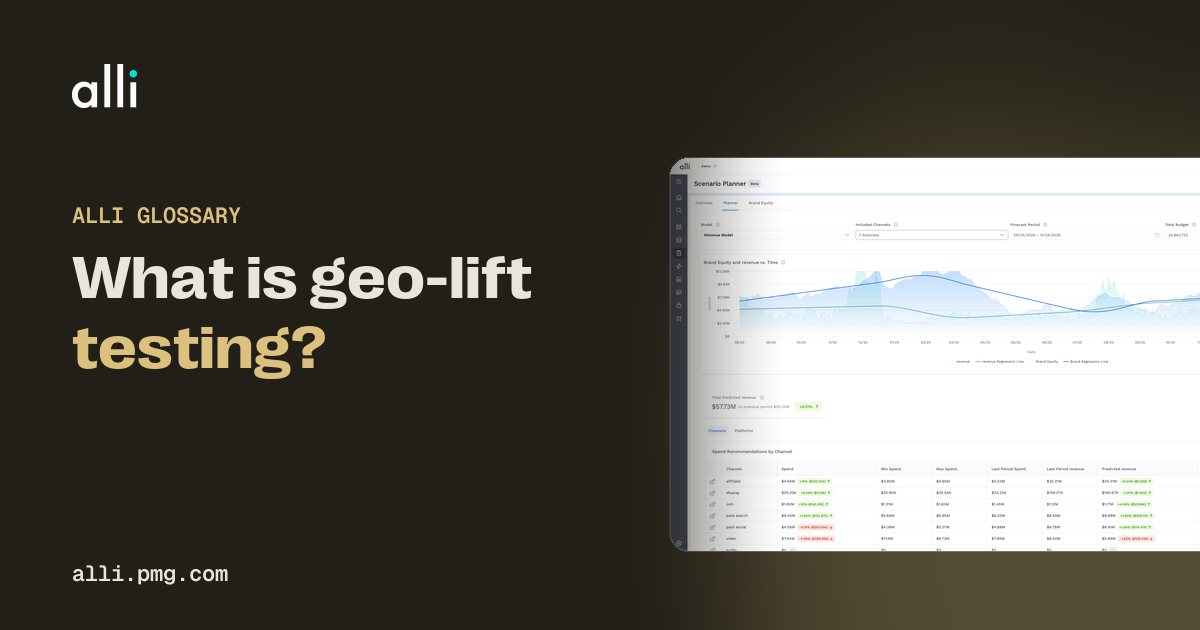
What is geo-lift testing?
Geo-lift testing changes marketing in some regions and not others to measure the lift it caused. Learn how geo experiments work, with an example.
Read the article
What is conversational analytics?
Conversational analytics lets people ask business data questions in plain language and get answers, tables, and charts back. Learn how it works.
Read the article
What is answer engine optimization (AEO)?
Answer engine optimization (AEO) structures content so search features, voice assistants, and AI tools use it as the direct answer. Learn how AEO works.
Read the article
What is data governance?
Data governance is the rules, roles, and controls for how data is defined, accessed, and changed. Learn how it works for marketing data and for AI.
Read the article
What is a deterministic data foundation?
A deterministic data foundation always turns the same inputs into the same outputs. Learn how it differs from generative AI in the data layer, and why.
Read the article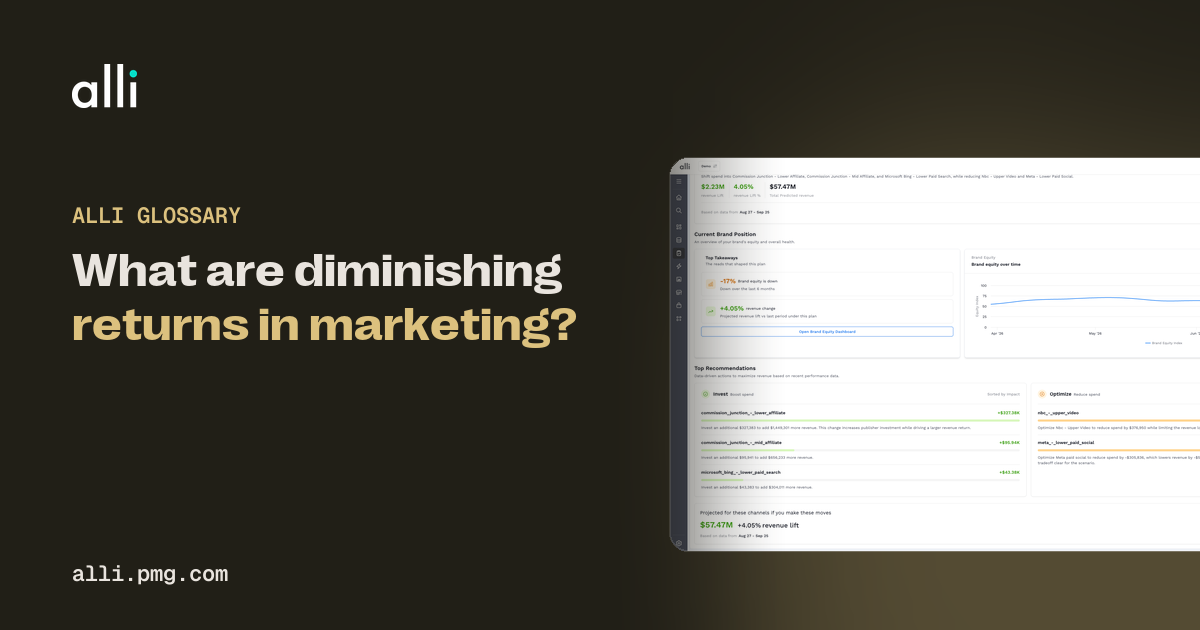
What are diminishing returns in marketing?
Diminishing returns happen when each extra marketing dollar drives less growth than the last. Learn how response curves show where to stop spending.
Read the article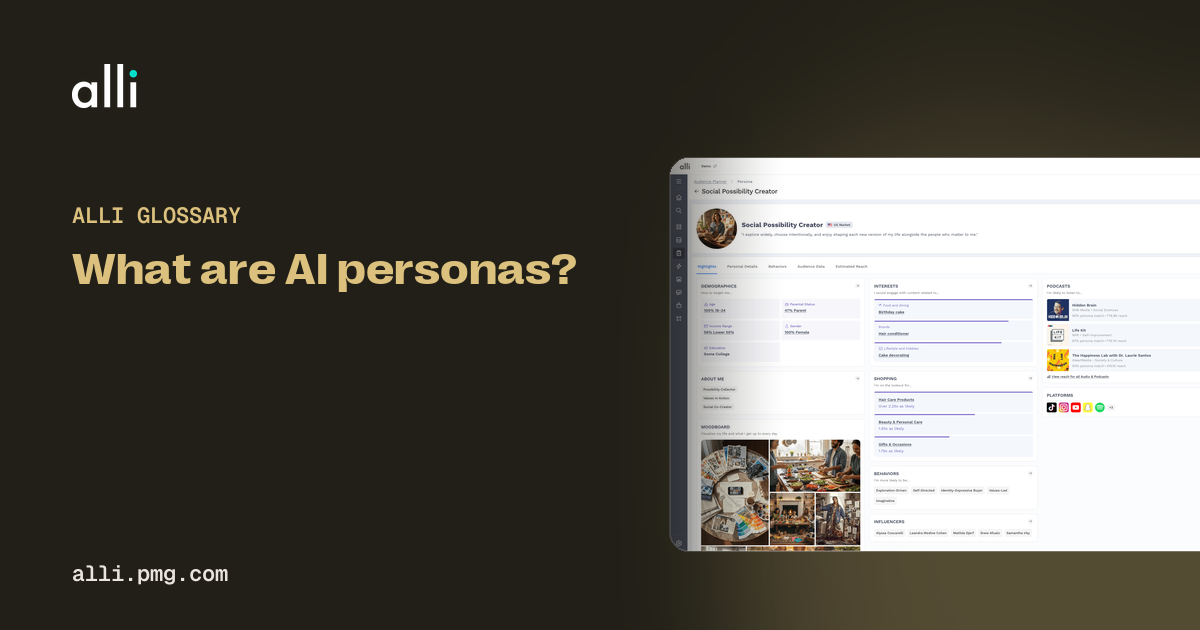
What are AI personas?
AI personas are audience profiles built or voiced with AI that teams can question in plain language. Learn how they work and what makes them reliable.
Read the article
What is the difference between AI agents and AI assistants?
AI assistants respond to prompts; AI agents pursue a goal across steps and tools. Learn the difference, with examples and a side-by-side comparison.
Read the article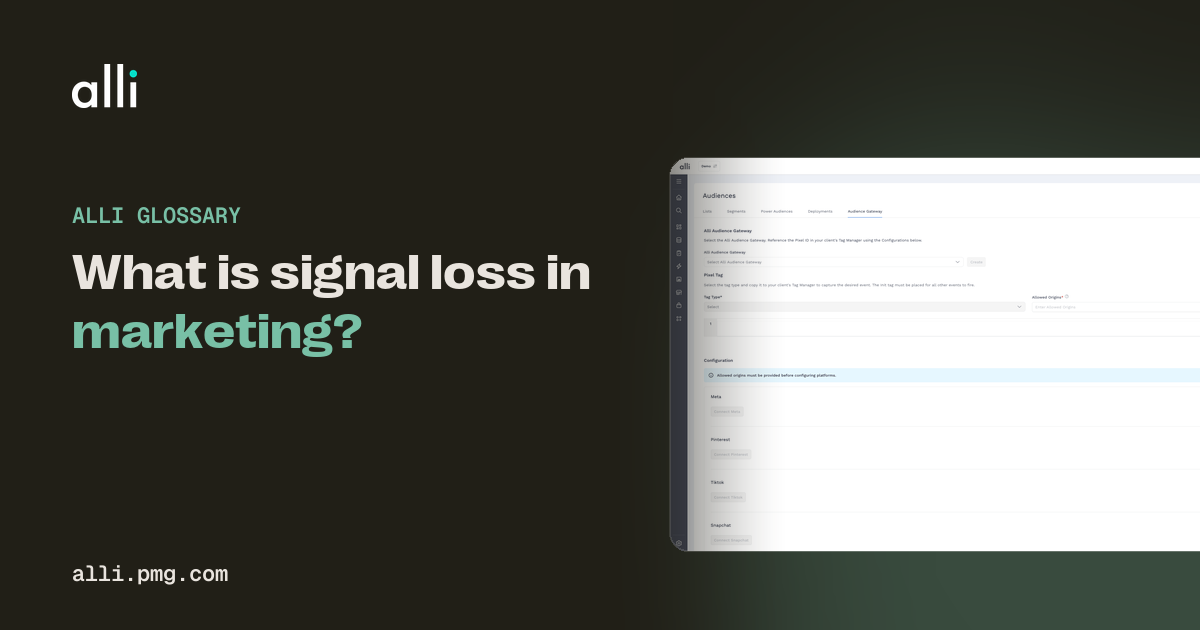
What is signal loss in marketing?
Signal loss is the gap between what customers do and what ad platforms can see. Learn its causes, its effect on measurement, and how teams recover signal.
Read the article
What is data lineage?
Data lineage records where data came from and every step that shaped it, so any number can be traced to its source. Learn how it works and why it matters.
Read the article
What is a creative scorecard?
A creative scorecard rates an ad against the creative features linked to stronger performance. Learn how scoring works and how to act on a low score.
Read the article
What is cookie deprecation?
Cookie deprecation is the shift away from third-party cookies for cross-site tracking. Learn where things stand, what it changes, and how teams adapt.
Read the article
What is creative automation?
Creative automation produces ad versions from an approved design, so teams scale output without losing the brand. Learn how it works and where it fits.
Read the article
What is a Conversions API (CAPI)?
A Conversions API (CAPI) lets an advertiser's server send conversion data straight to an ad platform. Learn how CAPI works and why it beats pixels alone.
Read the article
What is creative analytics?
Creative analytics connects the elements inside an ad to how audiences respond, so teams learn why an ad worked. See how it works, with examples.
Read the article
What is dynamic creative optimization (DCO)?
Dynamic creative optimization (DCO) assembles ads from interchangeable parts as they are served and favors winning combinations. Learn how DCO works.
Read the article
What is first-party data?
First-party data is information a business collects directly from its own customers and channels. Learn examples, how it compares, and why it matters.
Read the article
What is media efficiency ratio (MER)?
Media efficiency ratio (MER) is total revenue divided by total marketing spend. Learn how to calculate MER, how it compares to ROAS, and when to use it.
Read the article
What is media mix optimization?
Media mix optimization finds the split of budget across channels and markets most likely to hit a goal. Learn how it works and how to keep it current.
Read the article
What is an AI visibility score?
An AI visibility score tracks how often and how favorably AI models mention and recommend a brand against competitors. Learn how it is measured and used.
Read the article
What is marketing attribution?
Marketing attribution assigns credit for a sale to the touchpoints before it. Learn the main attribution models, their limits, and how they fit with MMM.
Read the article
What are enhanced conversions?
Enhanced conversions send hashed first-party data with conversions to improve Google Ads measurement. Learn how they work and how they compare.
Read the article
What is llms.txt?
llms.txt is a proposed plain-text file that summarizes a website for AI models. Learn what it contains, who uses it, and why it is not an adopted standard.
Read the article
What is the difference between point solutions and a connected platform?
Point solutions solve one problem each; a connected platform shares data and hands off work across products. Compare the tradeoffs side by side.
Read the article
What is AI hallucination in marketing analytics?
AI hallucination in analytics is when AI gives a confident but wrong answer about your data. Learn why it happens and how governed data reduces it.
Read the article
What is governed AI?
Governed AI runs on governed data, within set permissions, with audit trails and human approval. Learn what it takes and why enterprises need it.
Read the article
What is creative fatigue?
Creative fatigue is the drop in an ad's effectiveness as the same audience sees it again and again. Learn the warning signs and how to fix it early.
Read the article
How STARRY became culturally unavoidable to Gen Z
See how PepsiCo's STARRY used 205 TikTok creators to win Gen Z, reaching 187.5M+ impressions and 5.3% market share in its first year against Sprite.
Read the articleHow Athleta Saw 113% growth in e-commerce
Amplify a purpose-led brand in a crowded digital market and turn cultural moments into sales growth, including entry into Canada.
Read the articleBYD: 398% brand search lift across five new markets
Launch a Chinese EV brand that was nearly unknown in Europe across five markets and position it alongside established leaders like Tesla.
Read the articleLilly Pulitzer: 98% positive social sentiment
Make a heritage brand relevant to Millennial and Gen Z women without losing the loyal 'Lilly Woman'. The result: 98% positive social sentiment.
Read the article
How FXTM Lifted Brand Preference 200%
How PMG used Alli to plan and launch FXTM's UAE forex brand campaign in three months, lifting brand preference 200% and familiarity 120% among investors.
Read the articleNike: Building Nike's Global Media Data Foundation
Unify media data fragmented across 207 countries, 200 platforms, and internal systems into one trusted source that feeds Nike's CRM, CDP, and MDM.
Read the articleThe Woolmark Company: Wear Wool, Not Fossil Fuel
Teach eco-conscious consumers that synthetic clothing is made from fossil fuel and position wool as the natural alternative, across three Fashion Weeks.
Read the article